Woodworking Tools for Beginners: A Starter Kit You Can Build Slowly
You don’t need a full shop to start. A small set of hand and power tools will build most beginner projects, and you can add tools as each new project asks for one. Here is a sensible order to buy them, starting with safety.
1. Safety gear (buy first)
- Safety glasses rated for impact, such as ANSI Z87.1 in the US. Wear them over prescription glasses, or get prescription safety glasses.
- Hearing protection. Earmuffs or foam plugs for saws, routers and sanders.
- Dust mask or respirator. Fine sanding dust is the one to worry about. A shop vacuum helps too.
- Push sticks for any table saw or router table work, so your fingers stay well away from the blade.
- Avoid loose sleeves and jewelry around spinning tools, and unplug a tool before changing a blade or bit.
2. Measuring and marking
- Tape measure, 16 or 25 ft, with clear markings you can read easily.
- Speed square or combination square, for marking square and 45° lines.
- Sharp pencil or marking knife. A thin line means an accurate cut.
- Level. A 24-inch level covers shelves and benches.
3. Hand tools
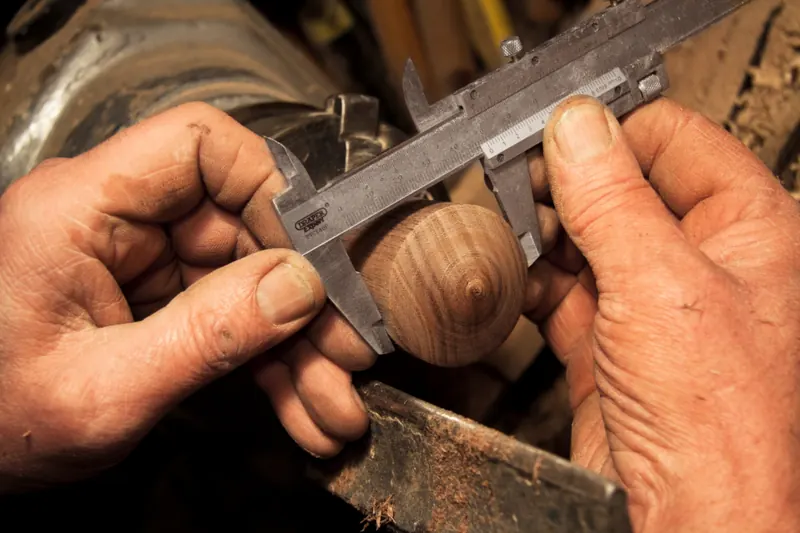
- Clamps. You can never have too many. Start with four bar clamps of 12–24 inches.
- Hand saw. A Japanese-style pull saw cuts cleanly with little effort.
- Chisels. A basic set from ¼" to 1" for cleaning up joints.
- Block plane. It trims edges and eases sharp corners.
- Hammer, screwdrivers and a nail set.
- Sanding block and sandpaper in 80, 120, 180 and 220 grit.
4. Your first power tools
- Cordless drill/driver. For drilling pilot holes and driving screws. It’s the most-used tool for most beginners.
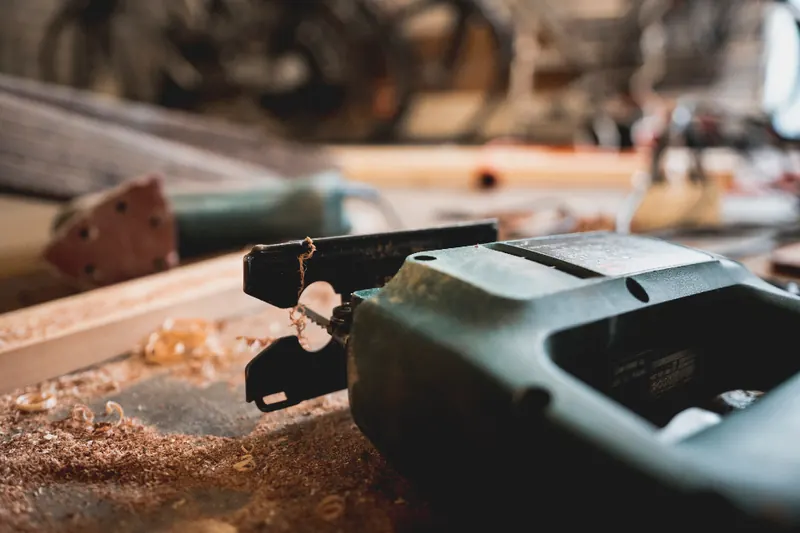
- Circular saw or jigsaw. A circular saw with a straightedge guide makes long straight cuts. A jigsaw handles curves and is less intimidating.
- Random-orbit sander. It saves hours and gives a much better finish than hand sanding alone.
- Miter saw (optional at first). It makes fast, accurate cross-cuts and angles for frames, trim and repeat parts.
Corded or cordless? Cordless is more convenient, and sticking to one battery brand saves money. Corded tools cost less to buy and never run out of charge. Both work fine for beginners.
5. Tools to add later
- Router for edge profiles, dadoes and rabbets.
- Pocket-hole jig for strong, quick joints in face frames and cabinets.
- Table saw, once you’re comfortable and have learned safe technique, ideally in a class.
- Workbench. Build your own! It’s project 10 in our beginner projects list.
6. Tips for buying on a budget
- Buy tools when a project needs them, not all at once.
- Look at used hand tools. Old planes and chisels are often better made than cheap new ones.
- Many home centers will cut plywood to rough size for you, which can replace a big saw early on.
- Choose plans that match the tools you own. Good plans list the tools they need.
Find plans that fit your tools. TedsWoodworking says its 16,000-plan library covers everything from simple crafts to large furniture. Our review explains what you get and what to watch for.
See the TedsWoodworking plans →Affiliate link. We may earn a commission at no cost to you. Disclosure
Next, read how to read woodworking plans.